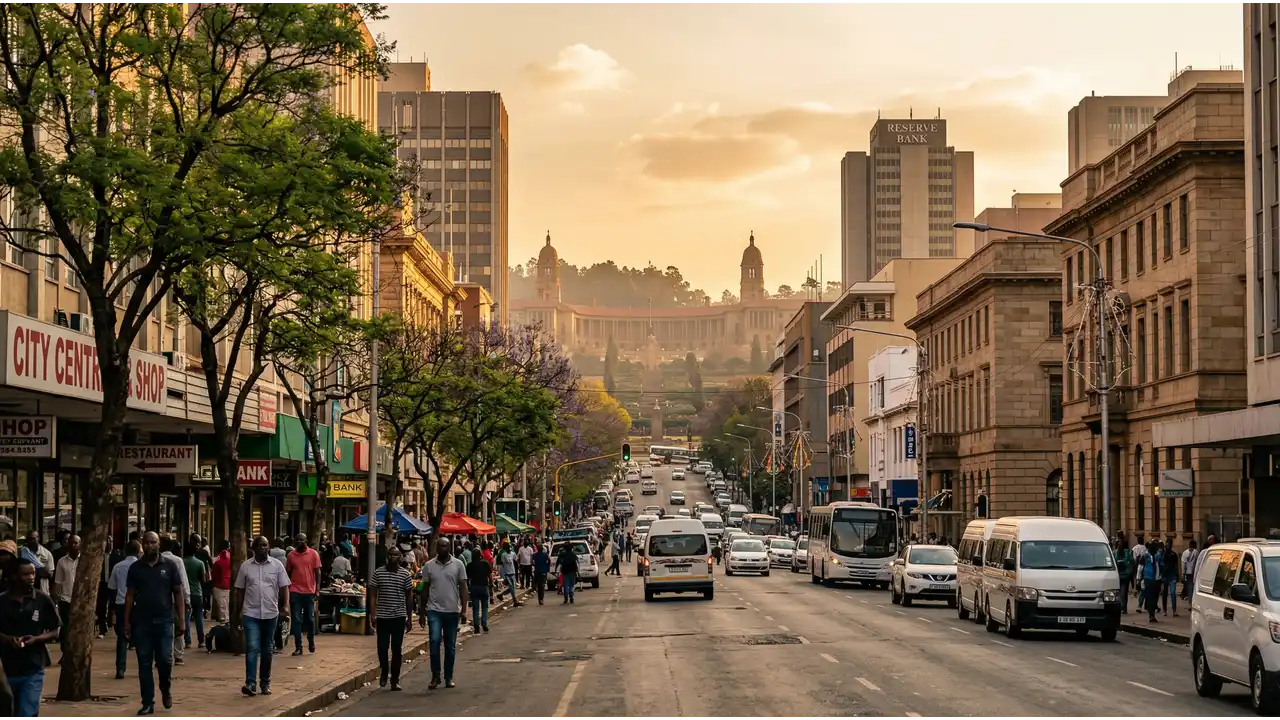
Pretoria is South Africa's administrative capital and home to about 2.4 million people across the metropolitan area. The city sits on a high plateau with a mild climate and jacaranda trees that bloom purple each October. It's a mix of government workers, academics (the University of Pretoria is substantial), and expats drawn by corporate opportunities. Daily life centers around car travel, though minibus taxis connect neighborhoods cheaply. The city has distinct residential zones: wealthy northern suburbs contrast sharply with township areas. Summers are warm and dry; winters rarely freeze. It's less touristy than Cape Town but more affordable and less congested than Johannesburg.
💡 Local Insights
Pretoria · 2026
Pretoria's cost of living reflects South African economic conditions: affordable by global expat standards, but with sharp variation by neighborhood and lifestyle. Housing runs $492/month for a moderate setup, though this varies significantly. Northern suburbs like Menlyn, Sunninghill, and Lynnwood Park command higher rents ($600-800 for a two-bedroom), while central and eastern areas like Sunnyside or Mamelodi offer cheaper options ($300-400). Expats typically pay more than locals for identical properties, sometimes 20-30 percent higher. Groceries average $220/month for a household, but prices spike for imported goods and at upscale stores. Local produce at neighborhood markets costs substantially less than supermarket chains. Transport depends entirely on your mode: a car requires fuel, insurance, and maintenance; minibus taxis cost $0.40-1 per ride and are how most residents move around. Utilities add $30-60 monthly. Eating out ranges from $2 street meals to $20-40 restaurant dinners. Expat salaries often exceed local wages for the same work, which some employers exploit; negotiate in ZAR (South African Rand) or specify USD terms upfront.
Frequently Asked Questions
How much does it cost to live in Pretoria per month?
A moderate lifestyle costs $1,175/month. This breaks down roughly as: housing $492, groceries $220, utilities $40, transport $80, eating out and entertainment $200, and miscellaneous $143. A tighter budget of $705/month is possible if you rent in outer areas, cook entirely at home, and use public transit; this cuts housing to $300-350 and food to $150. A comfortable lifestyle costs $1,821/month, which includes better housing $700-800, dining out more frequently, and leisure spending. These figures assume a single person or couple; families with children spend more.
What is the average rent in Pretoria?
Average rent centers on $492/month for a moderate one-to-two-bedroom setup. In northern suburbs like Menlyn or Sunninghill, expect $600-800/month for a modern two-bedroom apartment or small house. Closer to the city center (Sunnyside, Arcadia), furnished one-bedrooms run $350-450/month. Eastern and southern areas (Mamelodi, Atteridgeville) offer $250-350/month but are farther from business districts and expat services. Townhouses with yards run $500-700/month in mixed neighborhoods. Expats often pay 20-30 percent premiums over local renters. Most leases require proof of income and a deposit equivalent to one month's rent. Utilities are typically tenant responsibility.
Is Pretoria cheap to live in for expats?
Yes, Pretoria is considerably cheaper than Western Europe, North America, or Gulf states, but not as cheap as Southeast Asia. A $1,175/month moderate lifestyle is achievable; expat colleagues in comparable jobs in London or Dubai would spend $2,500-3,500. However, you pay expat premiums on rent and imported goods. Local salaries are low by global standards, so expat employees often earn multiples of local wages doing similar work. Healthcare and education (if using private schools) add significant costs not captured in the baseline budget. The real advantage is that a modest salary goes far, and your expat income provides genuine financial security. Pretoria also lacks the tourist markup of Cape Town, making it easier to live like a local.
How much does food cost per month in Pretoria?
Groceries average $220/month for a single person cooking at home. A loaf of bread costs $0.80-1.20, eggs $1.50/dozen, chicken $3-4/kg, rice $0.80/kg, and imported goods (cheese, cereal) run 40-60 percent higher than in the US. Local markets and discount chains like Shoprite offer better prices than upscale Woolworths or Checkers. A week's shop of staples (rice, beans, vegetables, eggs, basic meat) costs $35-45. Eating out is cheap: a plate of pap and meat from a street vendor costs $1.50-2, a casual restaurant meal $5-8, a nicer dinner $20-40. Alcohol is moderately priced; local beer around $1.50/bottle, imported wine $8-15. Prepared food from delis and fast-casual spots fills the gap between home and restaurants affordably.
What salary do you need to live comfortably in Pretoria?
A comfortable lifestyle costs $1,821/month, suggesting a gross monthly income of $2,300-2,500 (accounting for taxes and savings). In ZAR terms (at roughly 18-19 ZAR per USD), that's about 41,000-47,000 ZAR per month. Expat packages often include housing allowances, which dramatically change the math; if your employer covers rent separately, a salary of $1,200-1,500/month covers remaining costs comfortably. Local professionals earning 25,000-35,000 ZAR/month ($1,300-1,850) manage moderate lifestyles but rarely save significantly. Expat teachers or skilled workers often secure $1,500-2,200/month salaries plus benefits. Cost of living varies with your choices: childcare, private healthcare, and private school children can add $500-800/month. Negotiate salary in writing, specify currency (USD vs ZAR), and clarify whether housing or vehicle allowances are included.
How does the cost of living in Pretoria compare to other places?
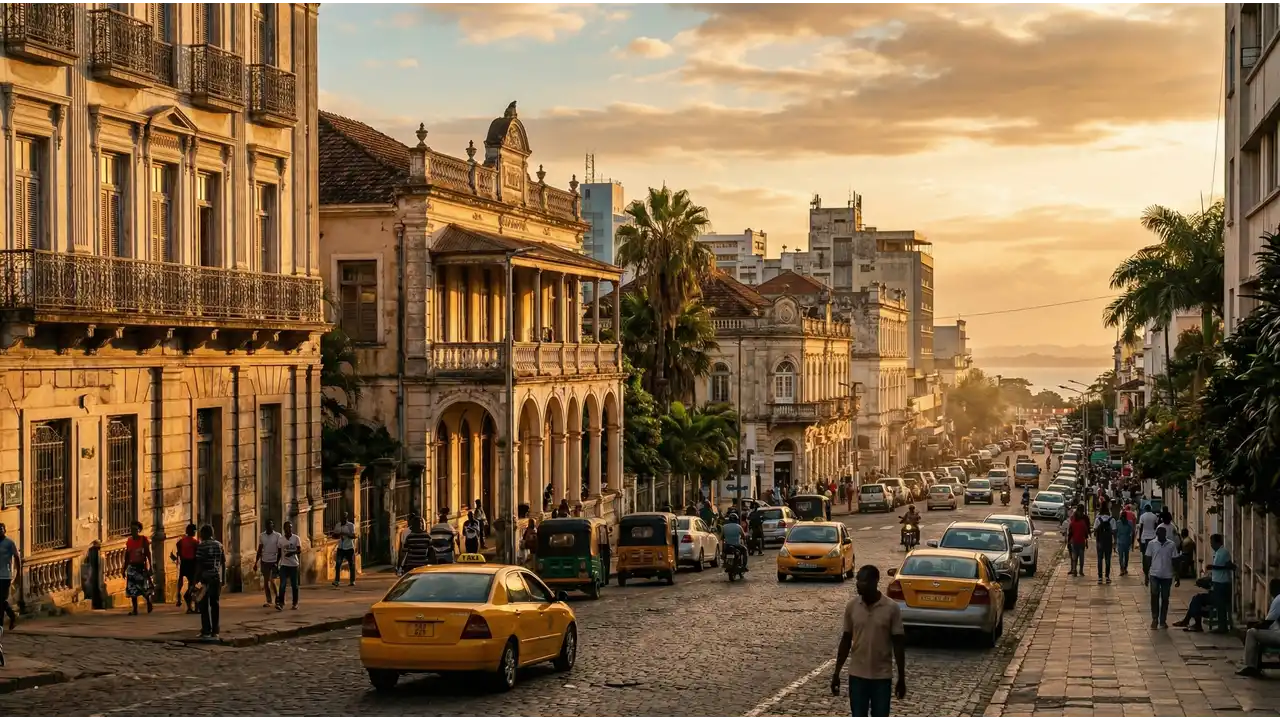
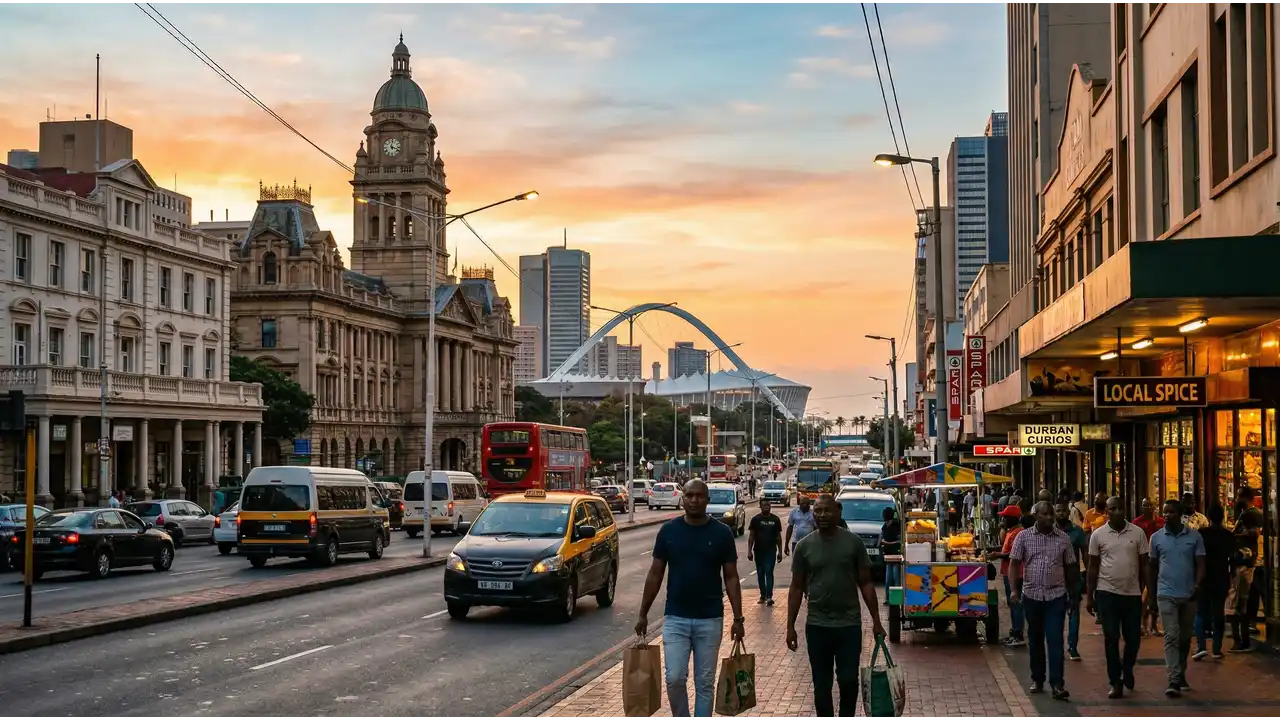
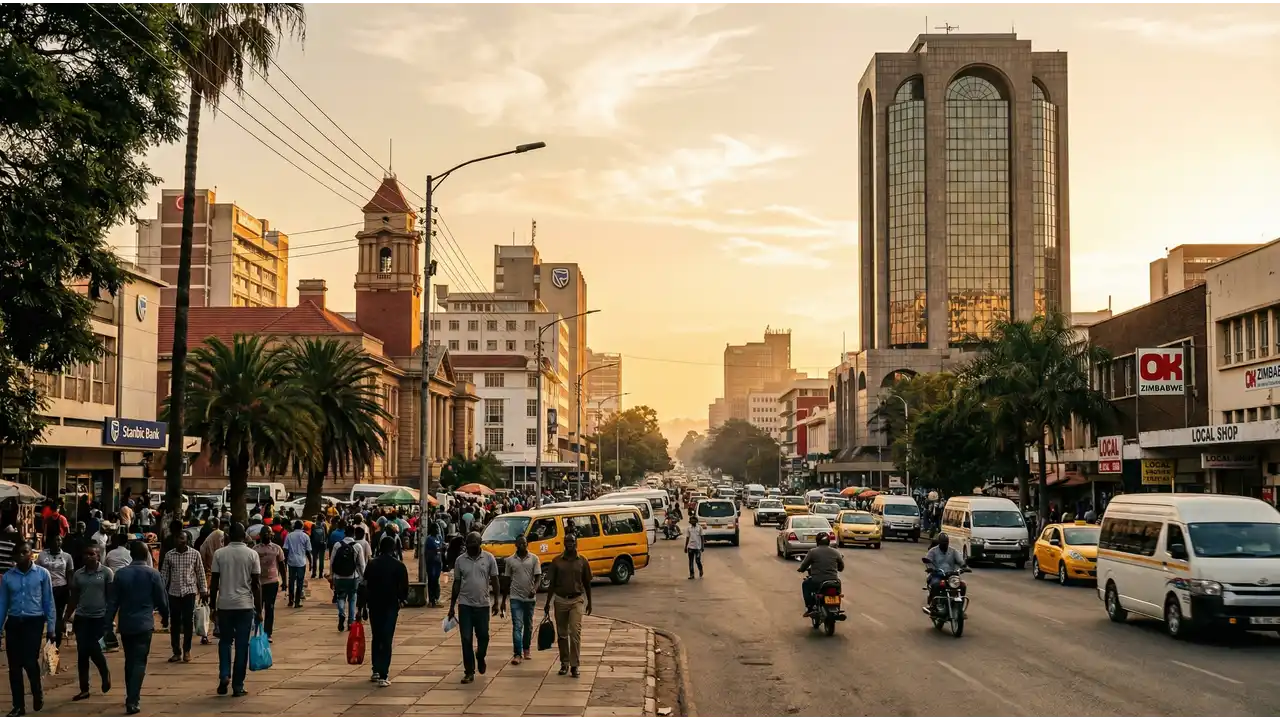
Pretoria sits in the middle range for Southern and Central African cities. A moderate lifestyle runs $1,175 per month, with housing at $492 monthly. That puts it slightly cheaper than Douala, where a moderate lifestyle costs $1,225 per month. You'll find Pretoria notably more expensive than Maputo, where the same moderate lifestyle runs $825 per month. The biggest gap is with Kinshasa, which runs $1,675 monthly for a comparable standard of living, making Pretoria roughly 30 percent cheaper. Housing costs follow a similar pattern: Pretoria's $492 compares favorably to Kinshasa at $637 per month, while Maputo's housing at $336 per month is the region's most affordable. For expats and locals alike, Pretoria offers reasonable value within the region, though your budget will stretch further in Maputo.
Yes, but with significant trade-offs. This budget is the bare minimum and requires: renting in outer or township areas ($300-350/month), cooking entirely at home ($120-150/month groceries), using minibus taxis ($15-20/month), and minimal dining out or entertainment. Utilities, phone, and transport eat the remainder. You'll live functionally but without comfort: no restaurant meals, no car, shared or basic housing, limited social activities. This budget works for students, remote workers willing to live frugally, or those with free housing. Most expats find this unsustainable long-term due to stress and isolation. Add $300/month for a modest lifestyle upgrade (better neighborhood, occasional dining out, reliable transport) to reach $1,000, which is where most people stabilize. NGO workers, volunteer roles, and some teaching positions operate in this range but often include housing.