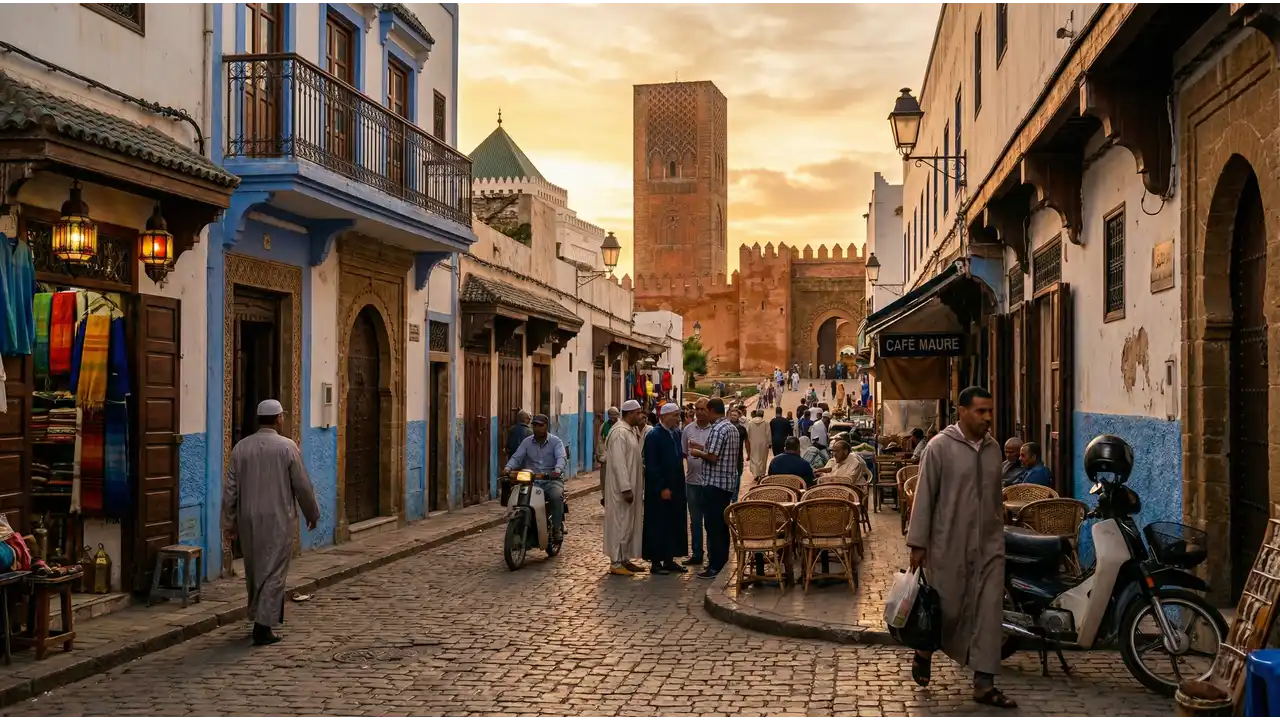
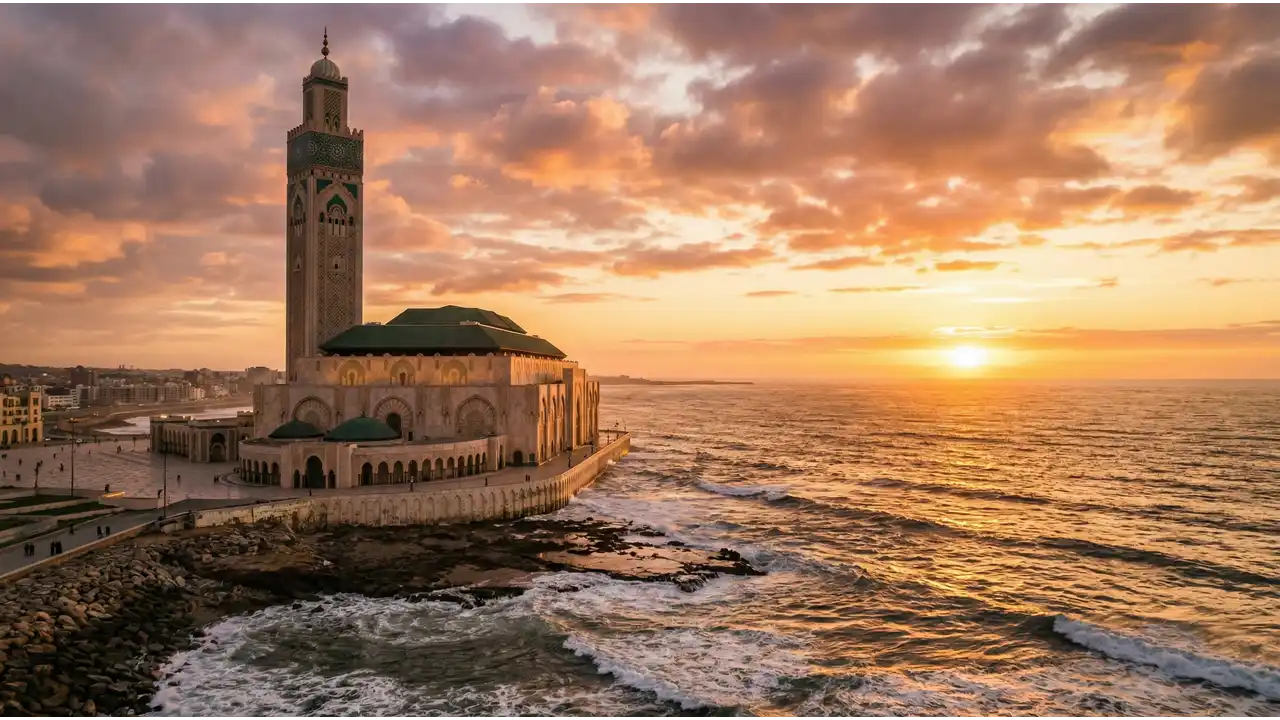
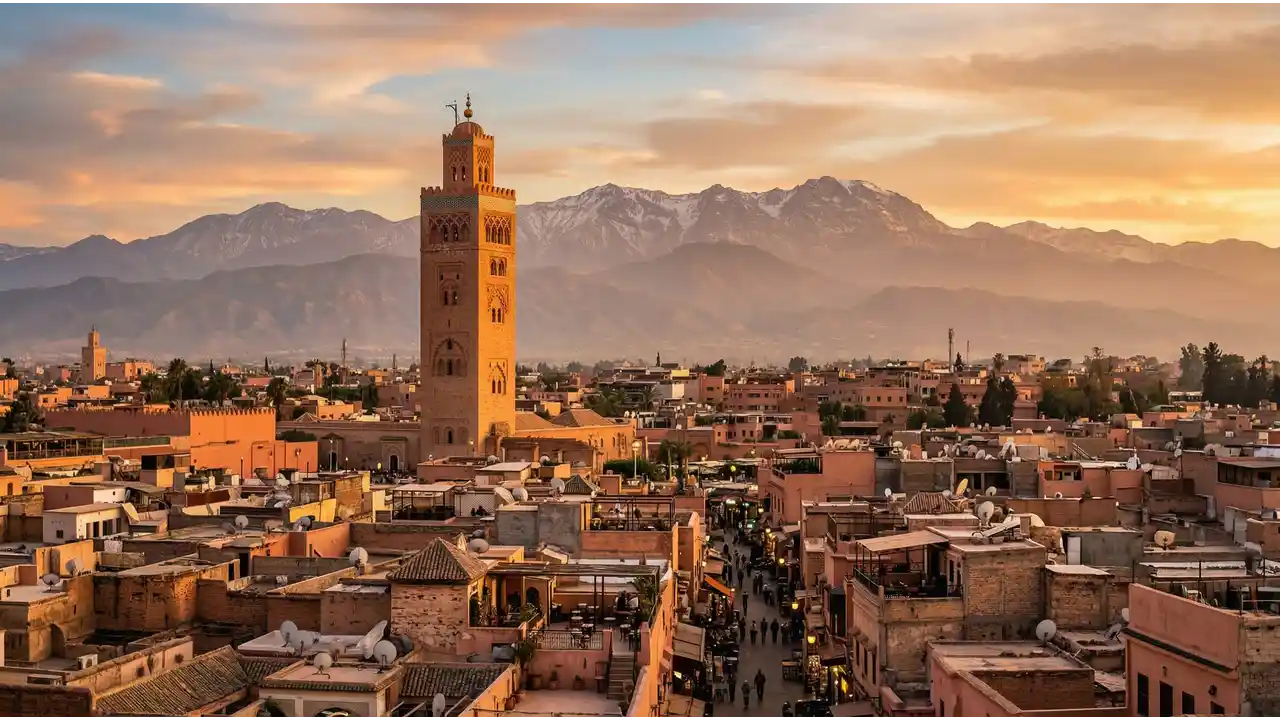
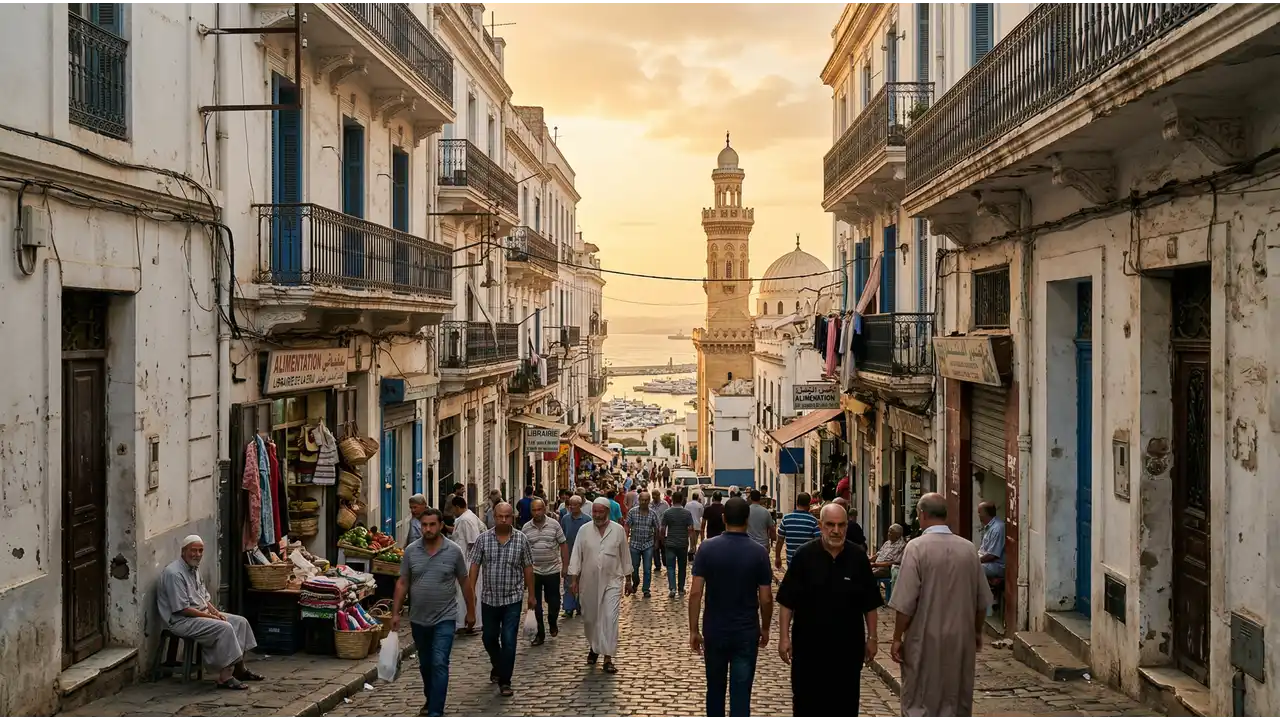
Rabat is Morocco's capital and political center, a coastal city where French colonial architecture meets modern development. Daily life involves a mix of government workers, students, and expats navigating relatively orderly neighborhoods compared to other Moroccan cities. The climate is Mediterranean, with mild winters and warm summers. Street life centers on the medina, local cafes, and the waterfront along the Bou Regreg River. French is widely spoken alongside Arabic. The pace is less frenetic than Casablanca or Marrakech, making it a practical base for remote work or administrative stays.
💡 Local Insights
Rabat · 2026
Rabat costs less than major European cities but more than rural Morocco. Housing runs around $492/month, covering a furnished one-bedroom apartment in central neighborhoods like Agdal or Ville Nouvelle, or a smaller place in less touristy areas. Groceries average $180/month if you shop at local markets and supermarkets like Marjane or Carrefour. Eating out remains cheap (tagine around $4-6, café au lait under $1), though tourist restaurants in the medina charge more. Public transport is limited; most residents use grand taxis (shared minibuses, $0.50-1 per trip) or rent motorbikes. Expats often pay slightly more for housing in sought neighborhoods but gain access to better furnished rentals. Internet is reliable at $15-25/month. The key cost variable is whether you eat local or import habits from home.
Frequently Asked Questions
How much does it cost to live in Rabat per month?
A moderate lifestyle in Rabat costs around $1,050/month. This covers housing at $492/month, groceries at $180/month, transport, utilities, and dining out occasionally. The budget tier is $630/month if you share housing, cook all meals, and avoid tourist areas. The comfortable tier reaches $1,628/month, which adds better housing, more frequent dining out, travel within Morocco, and international subscriptions. Actual spending varies based on whether you buy local or import goods and which neighborhoods you choose.
What is the average rent in Rabat?
Average rent is around $492/month. A furnished one-bedroom in Agdal, Ville Nouvelle, or Hassan neighborhoods typically runs $400-550/month. Unfurnished apartments may cost slightly less. Studio apartments in central areas range $300-400/month. Outside the center, in areas like Salé or outlying Rabat districts, you can find places for $250-350/month. Expat-focused furnished rentals with utilities included average $500-650/month. Longer-term leases (6 months or more) often negotiate lower rates. Check local Facebook groups and Avito for current listings.
Is Rabat cheap to live in for expats?
Rabat is inexpensive compared to Western Europe or North America, but not a rock-bottom budget destination. A single expat can live comfortably on $1,200-1,500/month. Housing is the main advantage; you pay $492/month for decent central housing versus $1,500+ in comparable European cities. Food and transport are cheap if you adopt local habits. However, imported goods, international schools, and expat social venues (restaurants, gyms) carry premium prices. Healthcare can be affordable if you use local providers, but expat insurance runs $50-100/month. Rabat attracts people on moderate incomes or remote workers more than rock-bottom travelers.
How much does food cost per month in Rabat?
Groceries run about $180/month if you shop at local markets and supermarkets. Oranges cost $0.50/kg, tomatoes $0.40/kg, chicken $2-3/kg, bread $0.30/loaf. Eating out is cheap: a tagine with bread costs $4-6, couscous $3-5, café au lait $0.80. Street food (harira soup, grilled fish, pastries) runs $1-3 per meal. Expat-focused restaurants in Hassan or the medina charge $8-15/main dish. A week of groceries for one person averages $30-40. Budget-conscious expats often split between local markets (cheapest) and supermarkets (convenience) to stay near $180/month.
What salary do you need to live comfortably in Rabat?
A comfortable lifestyle requires around $1,628/month. This covers housing at $492/month, food at $180/month, plus discretionary spending on dining out, entertainment, travel, and savings. For a couple, add 30-40 percent, reaching roughly $2,100-2,300/month. Remote workers earning $2,000-3,000/month can live well and save. Local salaries for Moroccan professionals typically range $400-800/month, so expats with foreign income have significant purchasing power. If you depend on local employment, budget $800-1,200/month for a modest but secure lifestyle. Currency matters: income in euros or dollars maintains value stability against the Moroccan dirham.
How does the cost of living in Rabat compare to other places?
Rabat sits in the middle of Africa's cost-of-living spectrum. A moderate lifestyle costs $1,050 per month here, with housing running $492 monthly. That puts it slightly above Durban, which costs $1,000 for the same lifestyle and $426 for housing. If you're coming from Lusaka, you'll find Rabat noticeably pricier. Lusaka runs $800 monthly overall with $304 in housing costs. On the other end, Addis Ababa is considerably more expensive at $1,500 per month, with housing alone at $816. Rabat's position reflects Morocco's relative stability and tourism infrastructure compared to some regional peers, but without the premium pricing of Ethiopia's capital. For most people, the city offers reasonable value if you're deliberate about where you live and eat.
Yes, but with tight constraints. The budget tier is $630/month, which requires sharing housing (reducing rent to $200-250/month per person), buying only local groceries, cooking all meals, using public transport, and avoiding restaurants and entertainment spending. A single person on this budget would need to find a room in a shared apartment or live outside the center. Internet and phone might consume $15-20 of the budget. There is no buffer for emergencies or unexpected costs. This works for long-term residents with low burn rates but not for those who want social flexibility or regular travel. Most people aiming for basic comfort and some buffer should plan for $800-1,000/month minimum.