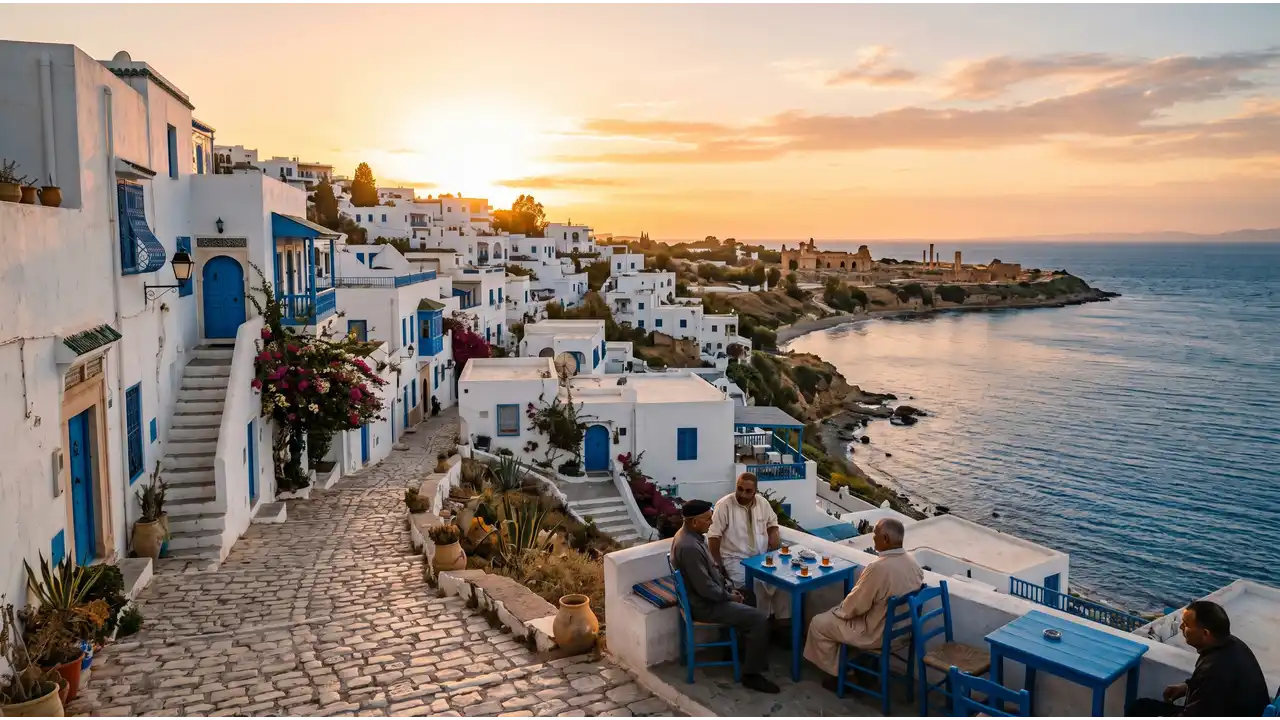
Tunisia is a North African country of about 12 million people, with a Mediterranean coast and Saharan interior. The capital, Tunis, is the largest city and home to most expats. Daily life centers on local markets, cafes, and tight family networks. The climate is hot and dry inland, milder on the coast. French and Arabic are spoken widely. Infrastructure is developing but reliable in urban areas. The pace is slower than Western cities, and relationships matter in business and daily transactions. Tourism and agriculture drive the economy. Most expats cluster in Tunis, Sousse, or Djerba for work, retirement, or lifestyle reasons.
💡 Local Insights
Tunisia · 2026
Tunisia is genuinely low-cost for most expats, but real expenses depend heavily on where you live and how you live. Housing runs $217/month on average, but that figure masks huge variation. A studio in central Tunis rents for $150 to $300 depending on condition and neighborhood; suburban flats are cheaper. Expats often rent furnished apartments in safer, quieter zones (La Marsa, Rades, Carthage) for $250 to $400. Food from markets and local shops costs $148/month for basics (bread, vegetables, olive oil, eggs, dried goods, canned fish). Expat-oriented groceries and imported goods cost significantly more. Eating out at local restaurants runs $3 to $6 per meal; Western cafes charge $8 to $15. Transport is cheap (buses $0.30 per ride, taxis metered), but many expats use ride-apps. Utilities average $20 to $50/month depending on season and usage. Healthcare is affordable but quality varies. Language and familiarity with local systems affect real costs substantially. Newcomers often spend more initially until they learn where to shop and how to negotiate.
Frequently Asked Questions
How much does it cost to live in Tunisia per month?
A moderate lifestyle costs $675/month. This breaks down roughly as housing at $217/month, groceries at $148/month, utilities around $30/month, transport $15 to $25/month, and the remainder for dining out, entertainment, and incidentals. A tighter budget runs $405/month (no dining out, minimal utilities in cooler months, basic housing). A comfortable lifestyle with better housing, dining flexibility, and travel runs $1,046/month. Your actual spend depends on neighborhood, whether you use AC regularly, eating habits, and frequency of expat-oriented services.
What is the average rent in Tunisia?
Housing averages $217/month. Studio and one-bedroom apartments in working-class neighborhoods (Ben Arous, Manouba) rent for $120 to $200/month unfurnished. Central Tunis (Belvédère, Mutuelleville) runs $180 to $300/month. Furnished apartments for expats in safer areas (La Marsa, Rades, Carthage) typically cost $250 to $400/month. Older colonial villas and larger places exceed these ranges. Utilities (electricity, water, gas) add $20 to $60/month depending on AC use and season. Furnished rentals include some utilities; unfurnished rarely do. Negotiate aggressively; posted prices often drop 10 to 20% for longer leases.
Is Tunisia cheap to live in for expats?
Yes, genuinely. At $675/month for a moderate lifestyle, it is substantially cheaper than Southern Europe, Mexico, or Southeast Asia for most expats. Rent and food are particularly low. That said, savings depend on choices. Expats who cluster in tourist areas and eat only Western food spend more. Those who use local markets, learn Arabic or French, and embrace local life costs significantly less. Healthcare and education (if needed) are affordable by global standards but quality is uneven. The main hidden cost is inefficiency and bureaucracy, which can waste time and money if you do not navigate local systems well. Long-term residents confirm the value holds.
How much does food cost per month in Tunisia?
Groceries from local markets and neighborhood shops run $148/month. A weekly shop might include bread ($1), fresh vegetables ($3 to $4 per week), olive oil ($8 per large bottle, lasts months), eggs ($2 per dozen), dried goods, canned fish, and cheese. Meat and imported items cost more. Eating out at local casual restaurants costs $3 to $6 per meal (couscous, tagine, sandwich). Expat-oriented cafes charge $8 to $15. Alcohol (wine, beer) is available but taxed heavily, raising prices. French imports at supermarkets cost 50 to 100% more than local equivalents. A single person eating mostly local food and cooking at home stays within $150/month easily.
What salary do you need to live comfortably in Tunisia?
A comfortable lifestyle costs $1,046/month. This allows for a nicer one-bedroom apartment or a small two-bedroom in decent neighborhoods, eating out several times weekly, regular cafe visits, domestic help (a cleaner twice weekly, $30 to $50/month), modest travel, and some buffer for unexpected costs. Most digital nomads and early retirees report $1,200 to $1,500/month gives genuine comfort without watching every expense. Couples often find $1,200 to $1,400/month sufficient for a one-bedroom apartment, shared utilities, comfortable dining, and occasional travel. Your comfort level depends on habits. Some retirees live well on $800; others spend $1,500 easily.
How does the cost of living in Tunisia compare to other places?
Tunisia is genuinely affordable compared to most destinations in the region. A moderate lifestyle costs $675 per month, with housing at $217 per month. This puts it slightly above Algeria, where a moderate lifestyle runs $650 and housing costs $144 per month. Tunisia is noticeably more expensive than Egypt, where you can live moderately for $550 with housing at $209 per month. If you're considering Morocco, expect significantly higher costs: Morocco runs $950 monthly for a moderate lifestyle and $340 for housing. For most Western expats and travelers, Tunisia offers solid value. Your money stretches furthest in Egypt, but Tunisia's prices remain competitive while offering better infrastructure and tourism services than some cheaper alternatives in the region. Food, transportation, and utilities are particularly reasonable.
Yes, but with real constraints. You need basic housing in a working-class neighborhood ($120 to $150/month), cook all meals from markets ($100 to $120/month), use buses exclusively (under $10/month), keep utilities minimal in warm months, and avoid dining out or imported goods. Healthcare emergencies, visa runs, or home country obligations bust this budget quickly. It works for long-term residents with low expectations and strong local ties. New arrivals typically spend more their first months learning systems and building routines. Nationals and long-term expats confirm $405/month is survivable but leaves no margin for comfort, social life, or emergencies. It suits temporary stays or exceptional discipline.