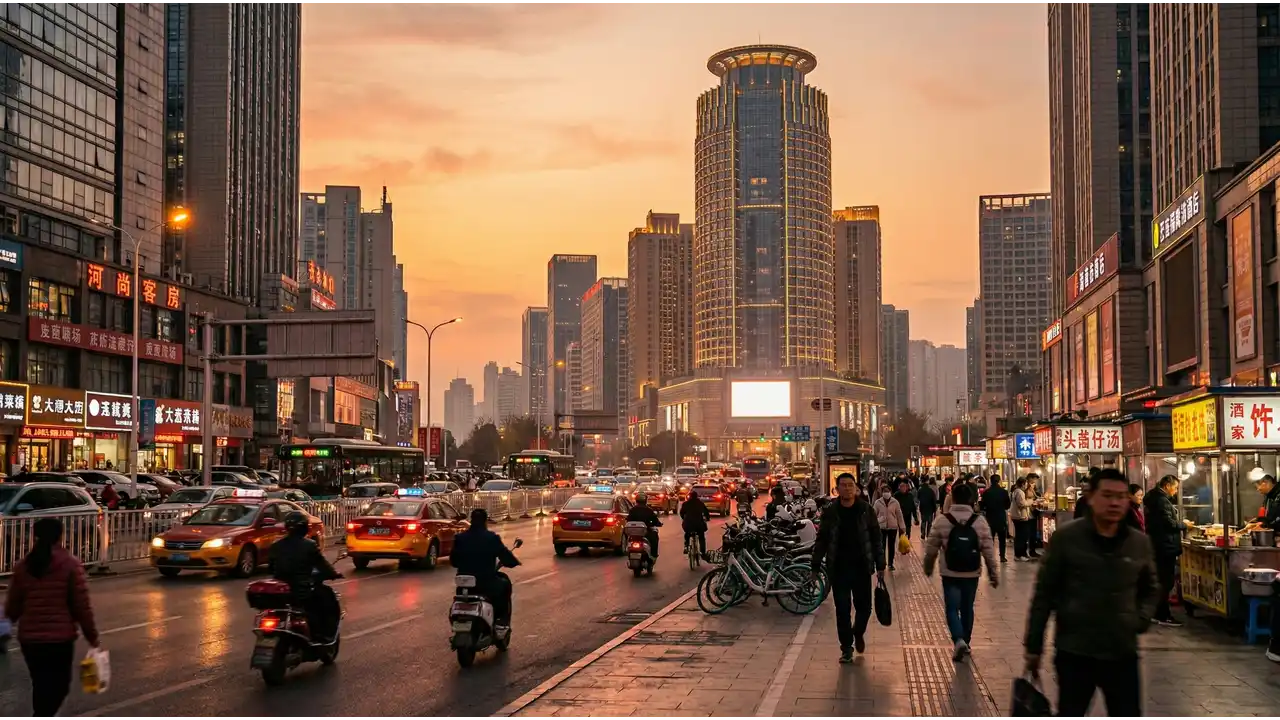
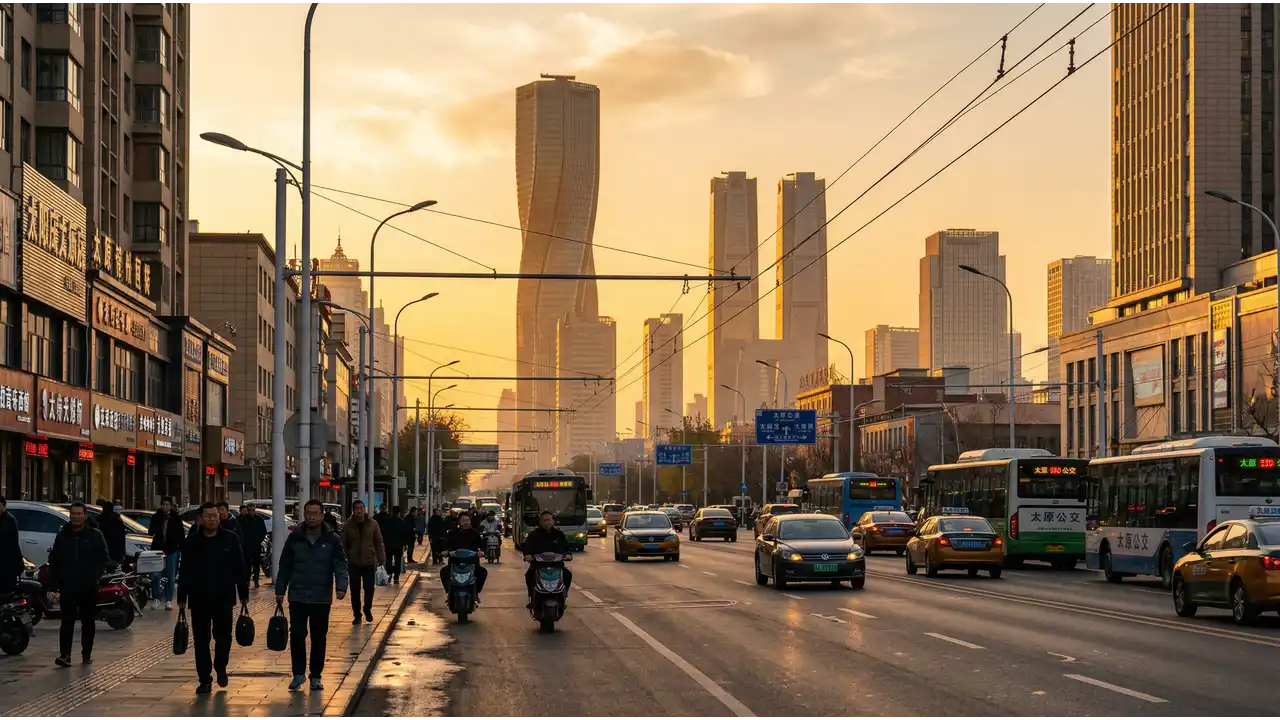
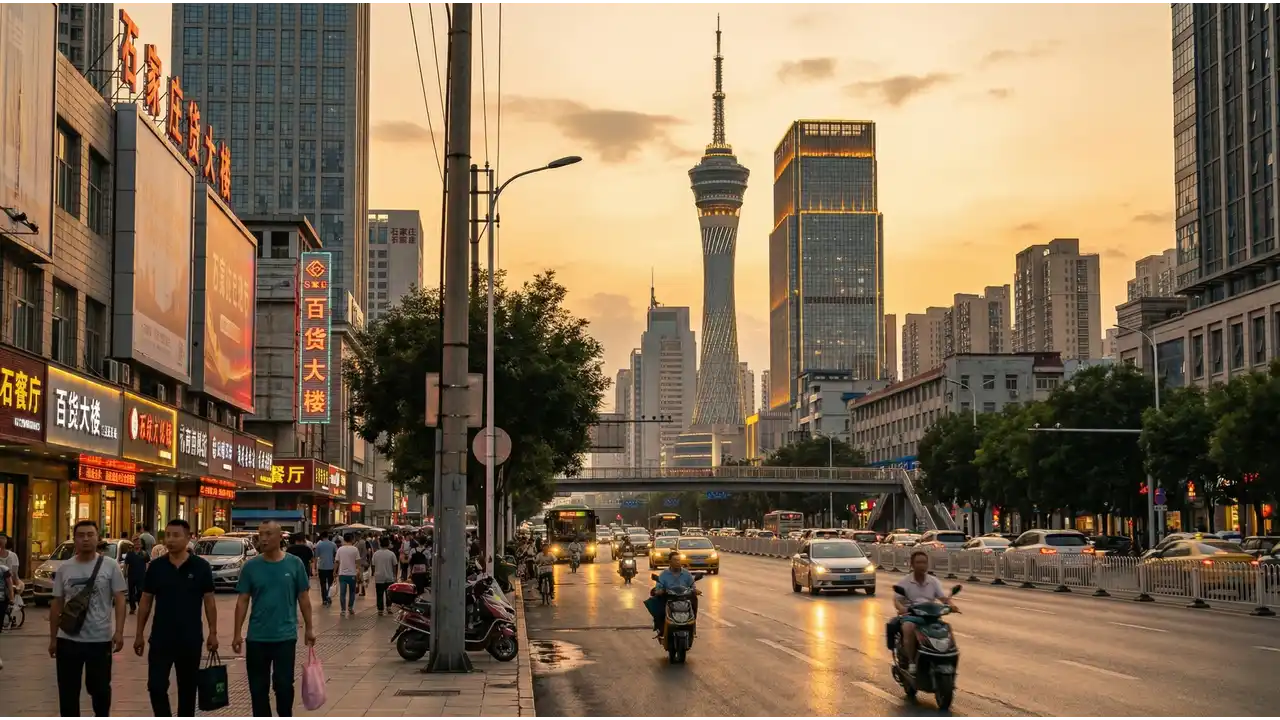
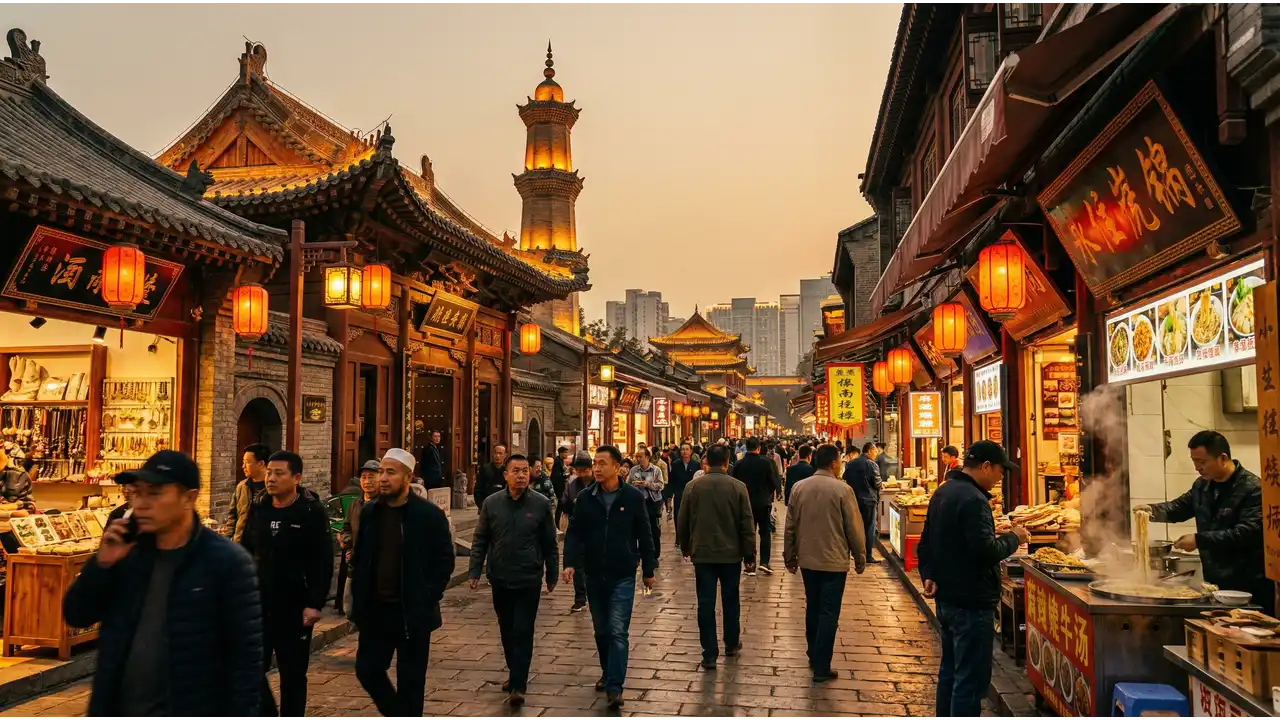
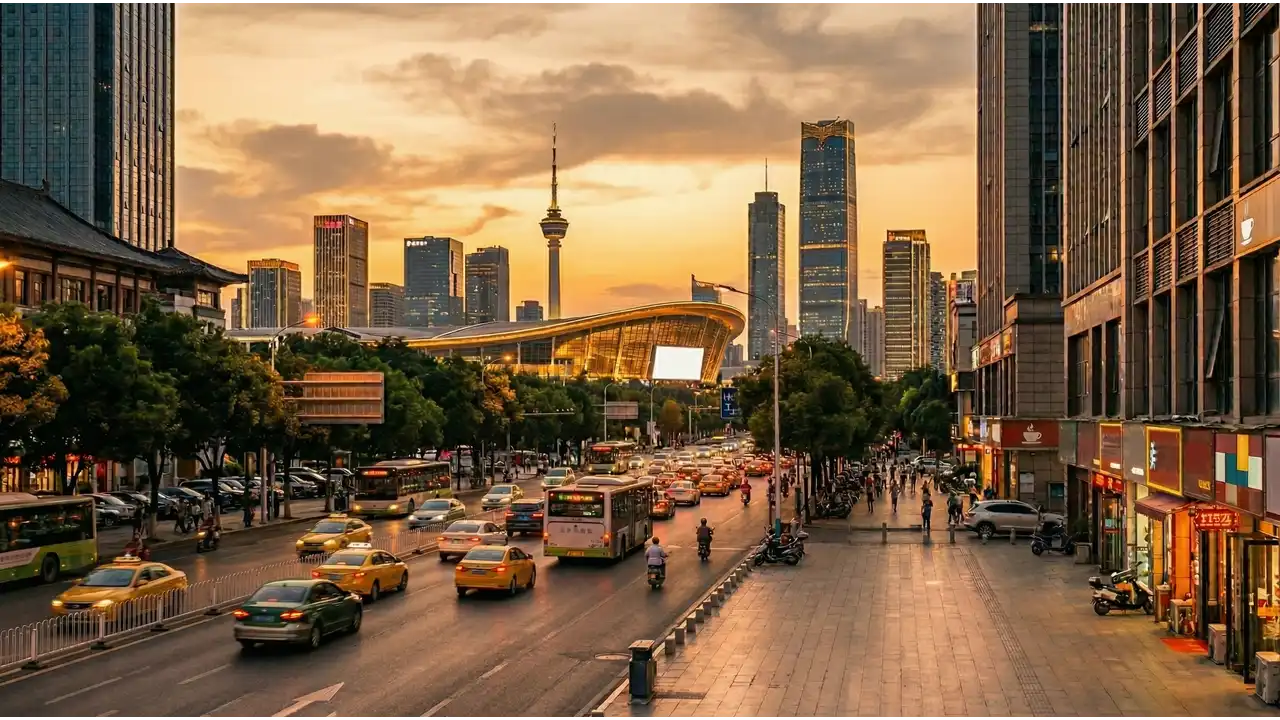
Zhengzhou is the capital of Henan Province and a major rail and logistics hub in central China. The city has grown rapidly into a modern urban center with a population around 10 million. Daily life revolves around the metro system, which opened in 2013 and continues expanding. The climate is humid subtropical, with hot summers (30-35°C) and cold, dry winters. Most residents are domestic migrants and locals; the foreign expat population is smaller than in Shanghai or Beijing. The downtown core around Erqi District feels distinctly urban and crowded. Neighborhoods vary widely from renovated commercial zones to aging residential blocks. Most people rely on public transit, delivery apps for food, and wet markets for groceries.
💡 Local Insights
Zhengzhou · 2026
Zhengzhou costs significantly less than tier-one cities like Shanghai or Beijing, but it is not dirt cheap. The moderate lifestyle budget of $975/month reflects realities on the ground: housing prices have risen as the city developed, though they remain lower than coastal metros. The $371/month housing figure shown here is the national China average that Zhengzhou inherits in our dataset, not a separate Zhengzhou measurement. In practice, a decent one-bedroom apartment in central areas (Zhongyuan, Erqi districts) typically rents for $400-650 per month. Outer districts and older buildings run $300-400. Groceries at wet markets and supermarkets average $195/month for a single person eating simply, consistent with our food figure. Street food and small restaurants cost $2-4 per meal. Metro rides are $0.50-1. Most expat costs creep up through imported goods, restaurant dining, and housing premiums for furnished apartments. Local wages are lower than coastal cities, so your purchasing power improves if earning in dollars.
Frequently Asked Questions
How much does it cost to live in Zhengzhou per month?
A moderate lifestyle in Zhengzhou costs $975/month. That typically breaks down as housing $371, food $195, transport $50-80, utilities $30-40, and discretionary spending covering entertainment and personal care. The budget tier is $585/month (stripped-down, local diet, shared housing, minimal extras). The comfortable tier is $1,511/month, which includes better housing, eating out regularly, and more leisure spending. These figures reflect a mix of local costs and the reality that Zhengzhou is cheaper than Shanghai or Beijing but more expensive than rural Henan.
What is the average rent in Zhengzhou?
The $371/month housing figure shown here is China's national average, inherited by Zhengzhou, not a separate rent measurement for the city itself. In actual Zhengzhou rentals, a one-bedroom apartment in central districts (Zhongyuan, Erqi) typically costs $400-650 per month. Older residential neighborhoods and outer districts run $300-400. Furnished apartments marketed to expats start around $600 and climb to $1,000+ for modern high-rises. Utilities add $30-40 monthly. Most long-term residents use local property apps like 58.com or Douban housing groups; expat-focused agencies charge higher commissions.
Is Zhengzhou cheap to live in for expats?
Zhengzhou is cheaper than Shanghai, Beijing, or Guangzhou, but not as cheap as many expect for central China. Housing premiums for furnished, expat-standard apartments are real. A one-bedroom marketed to foreigners costs $600-1,000, versus $300-500 for locals in the same area. Food is genuinely cheap if you shop at wet markets and eat local restaurants ($2-4 per meal). But expat habits push costs up: international groceries are pricey, gym memberships are $30-60 monthly, and eating out in nicer restaurants adds up. On $975/month, you live modestly but comfortably. On $1,511/month, you have breathing room.
How much does food cost per month in Zhengzhou?
Groceries average $195/month for a single person. A kilogram of rice costs $0.80-1.20, eggs are $1.50-2 per dozen, and vegetables at wet markets run $0.50-1.50 per kilogram depending on season. Supermarkets cost 20-30 percent more than wet markets. Eating out is cheap: noodle bowls cost $1-2, small dumpling plates are $2-3, and sit-down restaurants serve full meals for $4-8. Coffee at local cafes is $2-3; Western chain coffee is $4-5. Alcohol (local beer, baijiu) is inexpensive. Western imported goods (cheese, specialty oils, imported snacks) are expensive and rarely worth the cost.
What salary do you need to live comfortably in Zhengzhou?
The comfortable tier is $1,511/month, which assumes good but not luxury housing ($600-700), regular restaurant meals, regular entertainment, and a small cushion. In dollar terms, if you earn remotely, this is manageable. Local expat salaries for English teaching run $1,200-2,000 monthly; professional roles (finance, tech) pay $2,000-4,000+. To live on a local salary, you need at least $1,200 monthly for a single person to avoid stress. The $975/month moderate budget works if you are careful and comfortable with local living. Below $585/month is tight: shared housing, local food only, minimal leisure.
How does the cost of living in Zhengzhou compare to other places?
Zhengzhou sits in the middle range for Asian cities. A moderate lifestyle runs $975 per month, with housing at $371 per month. That puts it slightly above Surabaya, where a moderate lifestyle costs $900 monthly and housing $455, making Surabaya marginally cheaper overall despite higher housing costs. Islamabad is notably less expensive at $625 per month, with housing just $221 monthly, if you're open to South Asia. On the other end, Jeddah runs $1,350 per month with housing at $554, making it significantly pricier. Zhengzhou's strength is reasonable housing costs paired with affordable food and transport. You'll spend more here than in Pakistan or Indonesia, but substantially less than in Saudi Arabia. For a Chinese city, Zhengzhou offers solid value, especially compared to tier-one cities like Shanghai or Beijing.
Yes, but only if you accept a tight, local-style budget. That means shared housing ($200-250), groceries from wet markets ($150-170), no eating out, no gym, minimal entertainment, and public transit only. You would have almost no cushion for medical care, travel, or unexpected costs. Most expats find this unsustainable beyond a few months without stress. Single locals on similar budgets often live with roommates or family, have lower expectations for privacy, and know which streets to shop on. If you have savings, $585/month works as a trial. If it is your actual monthly income, plan to spend more or look at smaller cities outside Zhengzhou.